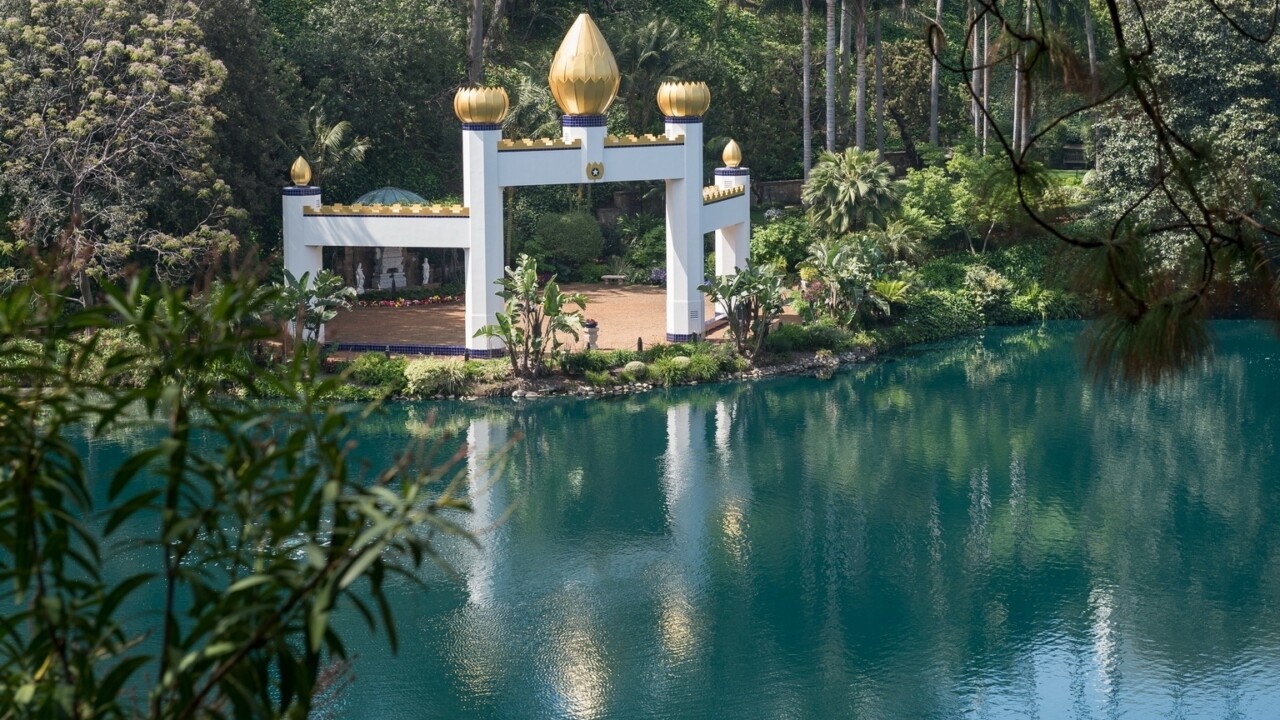
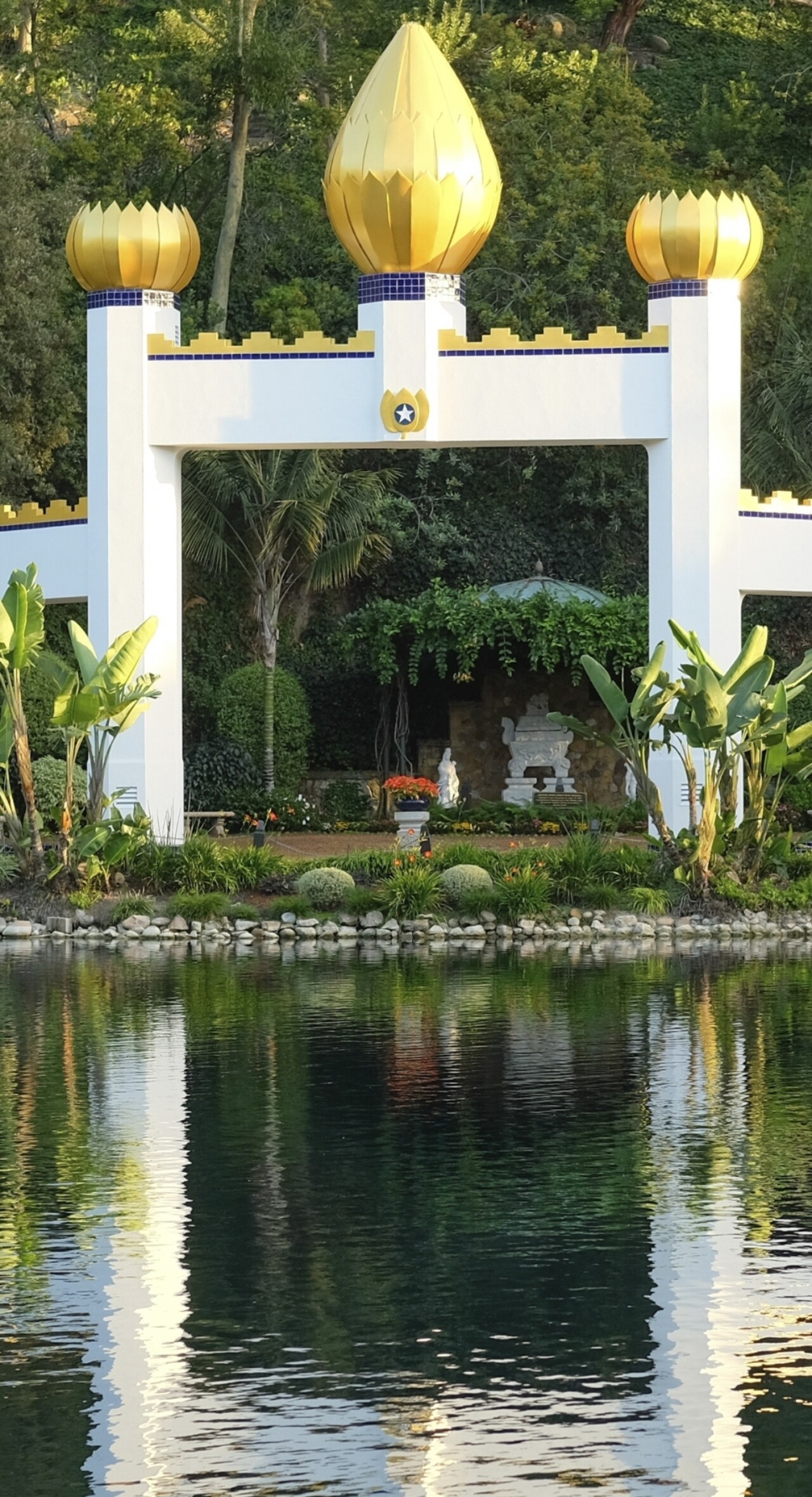

It rests at the lake's edge, framed by banana trees and square
archways: a Chinese sarcophagus believed to be 1,000 years old.
Its white stone exterior is carved with dragons. Inside lie
the ashes of one of the great crusaders for peace, Mohandas
Gandhi.
This tranquil spot seems to some to be deeply filled with
mystical forces.
"Every place has got an energy of its own," says
Bobette Stanbridge, who sits on a stone bench in the solitude
of the adjoining garden. "When you have a place like this,
so continually blessed by prayers and meditation, the energy
is very powerful."
Years ago, Stanbridge was married here, at the lake Shrine
meditation gardens in Pacific Palisades a union that
eventually failed. Despite that, she returns whenever moved
by a certain longing. The trip takes an hour from her home in
Oxnard, but it is a small inconvenience for the chance to find
solace.
And after the horrors of New York City and the Pentagon, she
wants solace for all.
"I'm here to spend the whole day in meditation and prayer
for ... the world," the 52 year-old says softly. "There's
so much darkness. There's so much anger and disconnection from
God."
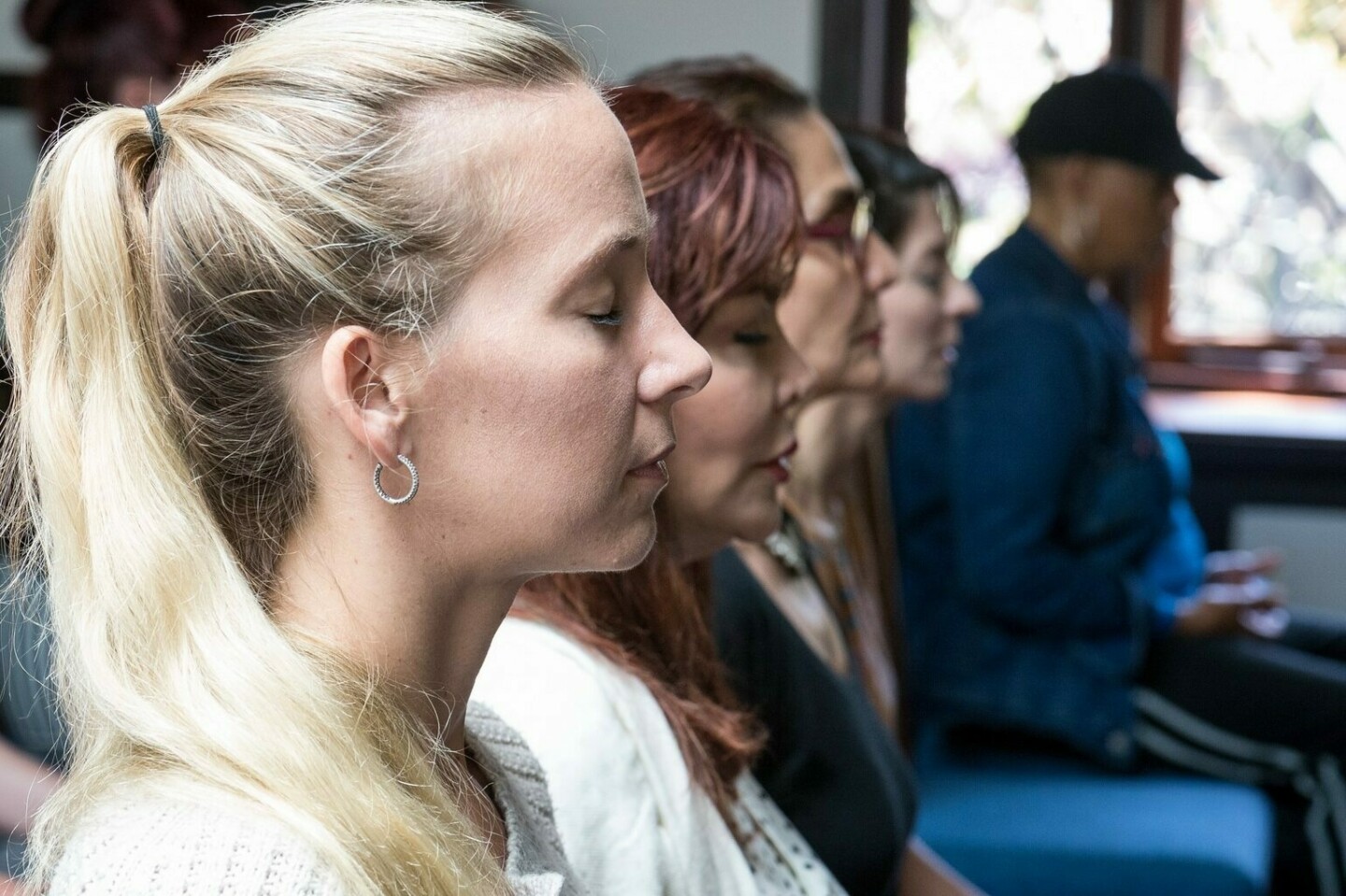
For long moments, eyes closed, she sits as still as the trees.
Lake Shrine was created for that for looking inward.
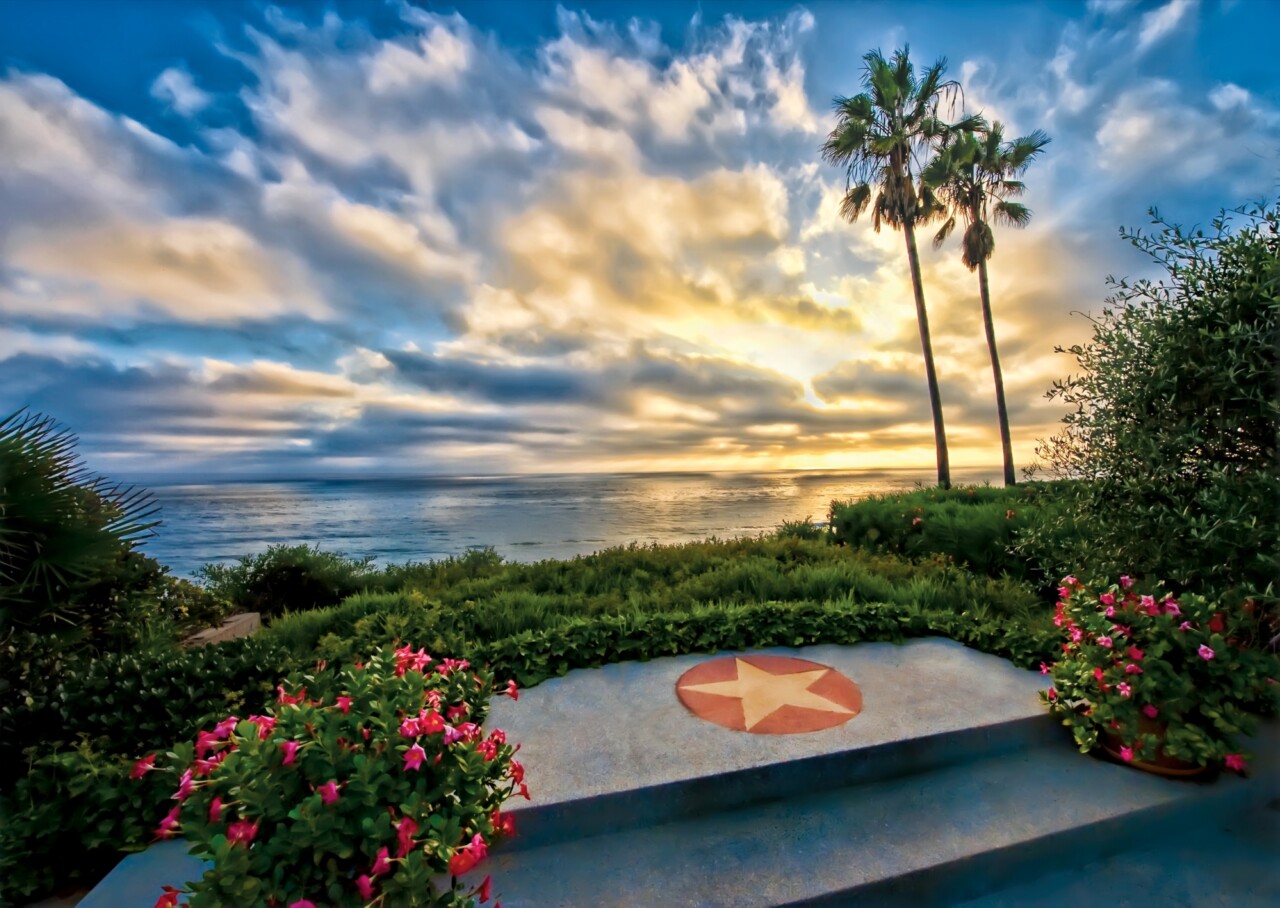
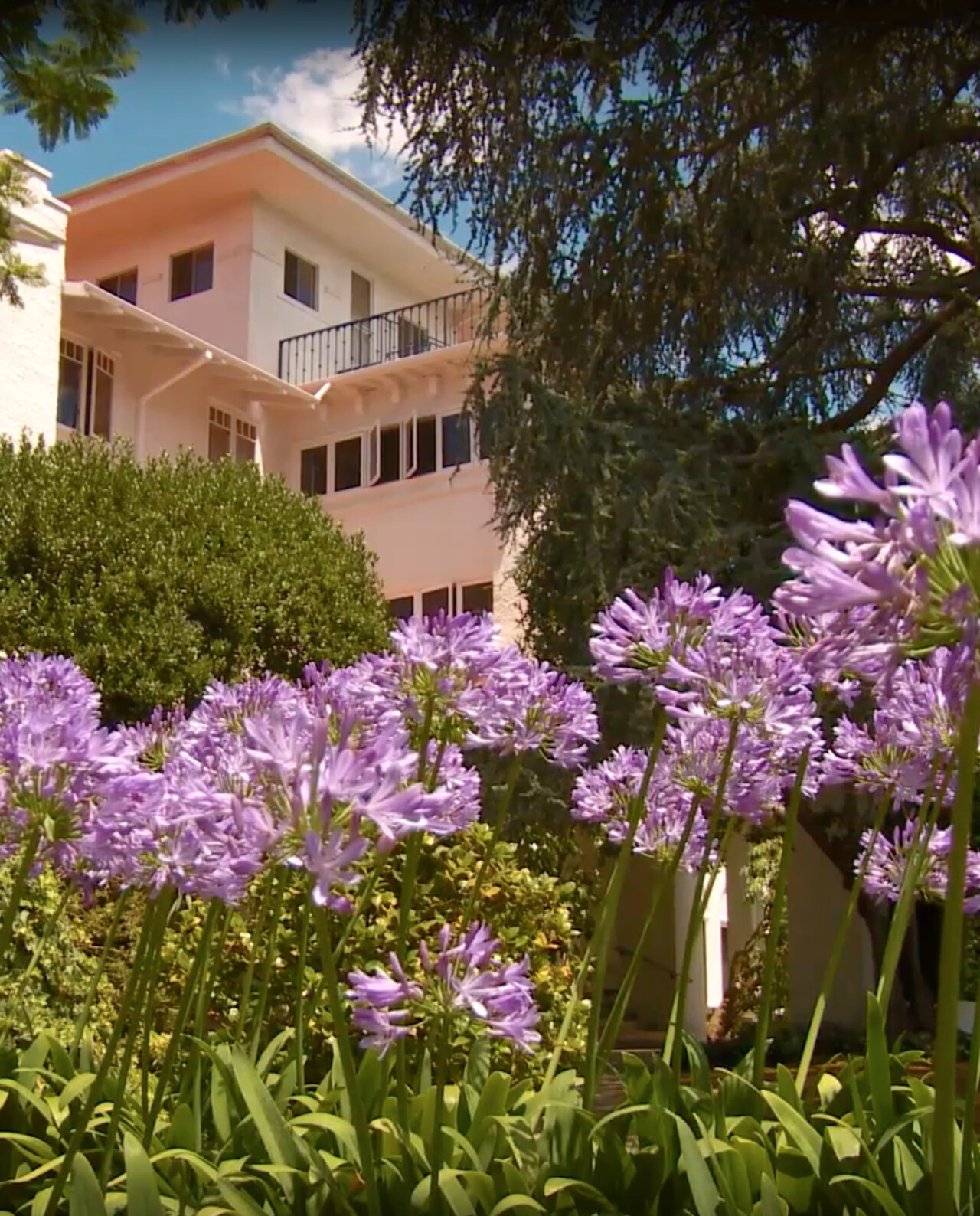
The 10-acre gardens are lush and moist and quiet as the autumn
sunlight. Sounds seem all but swallowed up in the foliage and
steep surrounding hillsides, which form a bowl around the spring-fed
lake and gardens.
On Sunset Boulevard near Pacific Coast Highway, Lake Shrine
is so inconspicuous from the road that many drive past it for
years without ever venturing inside. Mike Livsey lived in the
Palisades for a quarter-century before discovering the unusual
sanctuary, and now, at 88, he figures he's been stopping by
for another quarter-century.
"You don't have to be religious," he says. "I'm
not especially religious, but I enjoy walking around this place."
Livsey sits with two guests from England, looking out on the
lake from a pristine courtyard. Ted and Marj Newbuoy, from remote
Chester, find much of Los Angeles overwhelming. But Lake Shrine
is different from anything else they have seen, strangely timeless
and apart from the rush and anxiety.
"It's rather special," Marj Newbuoy says. "I'm
amazed to see all the different denominations here."
The nonsectarian gardens, which am open free to the public
but rarely crowded, are filled with flora from six continents.
There are tropical palms and ferns, cypress and ginkgo trees,
Mexican weeping bamboo and Japanese black pines. There are desert
cactuses, coastal redwoods, impatiens, pampas grass, wisteria,
passion flowers, water lilies.
A replica of a Dutch windmill built by a movie studio executive
who owned the property in the 1940s, is used as a lakeside chapel.
Thin waterfalls cascade down opposite shores.
"There's something about the water; I was just closing
my eyes and listening to the water," says Lisa Brooks,
27, of Santa Monica. "Sometimes I'll bring my sketch book
or journal .... "It helps me escape for a while and refocus
on life."
A single quarter-mile trail rims the lake, but the spiritual
paths are said to be many. Near a rose garden stand small monuments
to the major religions: Buddhism, Christianity, Hinduism, Islam
and Judaism. Some find meaning in a particular marker; others
appreciate the larger symbolism of them grouped together at
a time when religion is used to justify atrocities and nations
prepare for war.
"Thank God we have the Lake Shrine," says Kathe
Arndt of Santa Monica, who sought out the sanctuary soon after
the Sept. 11 attacks. "It's like instant meditation. You
can slip into it so easily."
Her thoughts, like those of so many others, center on hopes
for peace. "I don't want to render evil for evil,"
she says. "I don't want more innocent lives lost."
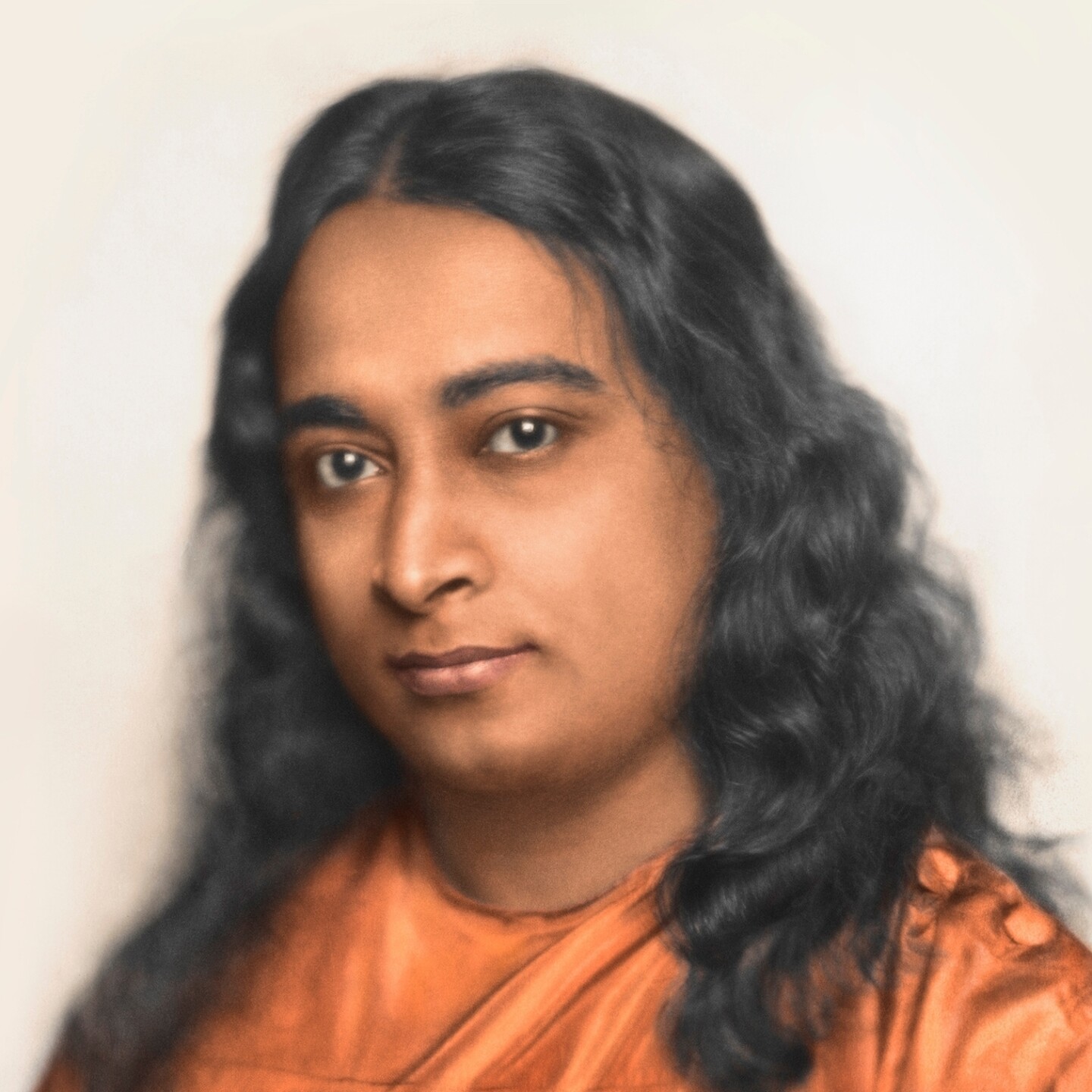
The gardens are the legacy of Paramahansa Yogananda, the Indian
spiritualist who founded the worldwide Self-Realization Fellowship
and introduced yoga to America in the 1920s. Yogananda was befriended
by Gandhi, and eventually received the only portion of Gandhi's
ashes shipped outside India. The sarcophagus and lotus-topped
archways surrounding it were dedicated as the Mahatma Gandhi
World Peace Memorial when the gardens opened in 1950.
Yogananda died two years later. His life has been memorialized
in his own widely read "Autobiography of a Yogi" and
in a tiny museum near the lake.
According to accounts, Yogananda knew when he would die and
confided it to his followers when the moment drew near. His
mahasamadhi a soul's "conscious exit from
the body" occurred at age 59, at a dinner for the
Indian ambassador to the United States at the Biltmore Hotel
in downtown Los Angeles.
"He gave his speech, recited a poem about India and gracefully
fell to the ground," says Lauren Landress, a spokeswoman
for the fellowship. "In the [autopsy] report they had to
give some cause for his death and they said heart failure
but he died naturally."
A news clipping in the museum testifies to one other oddity:
The body was examined 21 days later and showed no signs of decay.
His organization now administers more than 500 temples and
meditation gardens in 57 nations. The temple on the hill above
Lake Shrine bases its services on Yogananda's teachings, draws
from the Bible and the Bhagavad Gita; the ancient Hindu scripture.
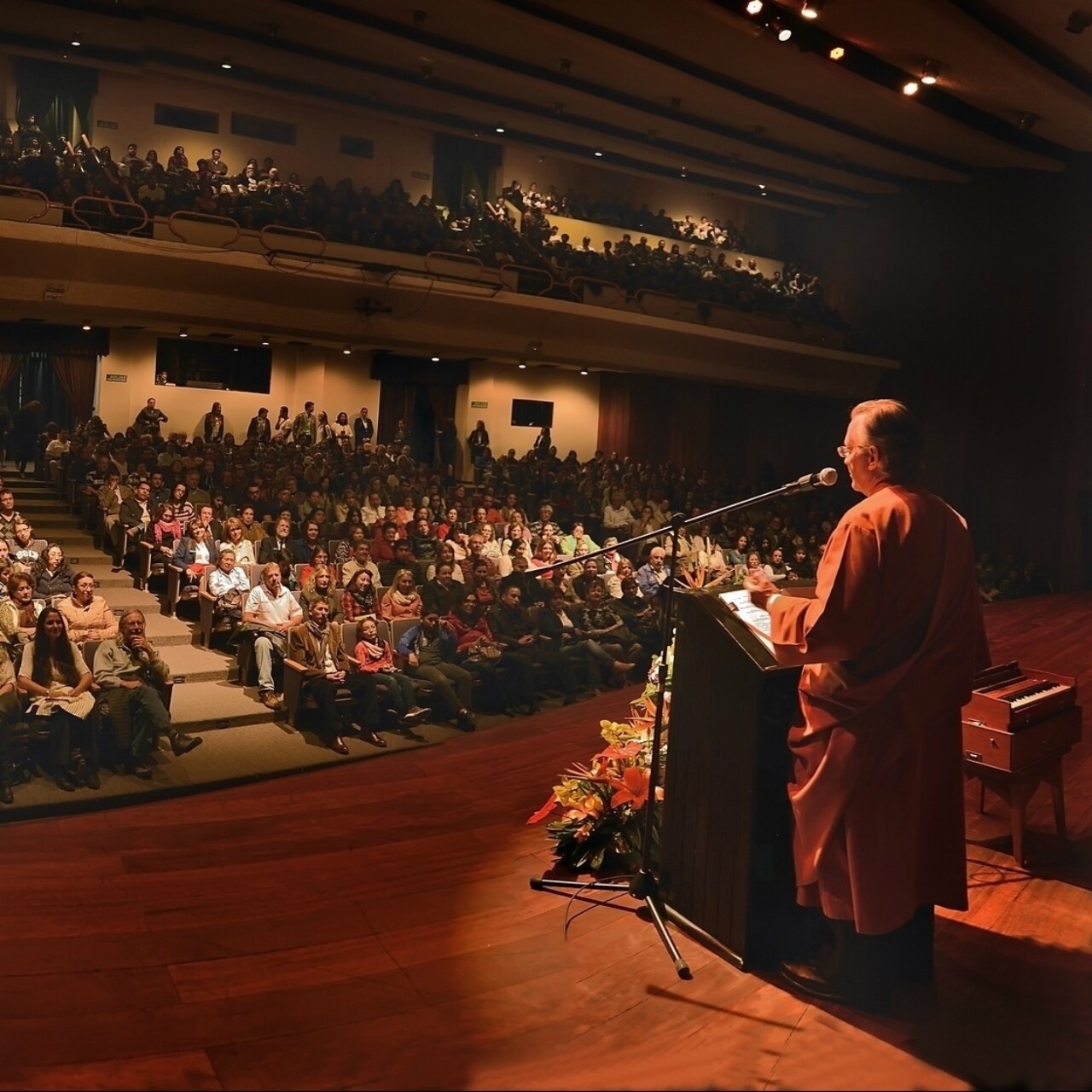
Thousands have attended since the attacks on the Pentagon
and World Trade Center. Some, like Arnold DeMarco, follow the
worship service by descending the long, zigzagging trail to
the gardens.
"There are people who say Yogananda is constantly sending
his love here," DeMarco says during a break in his meditation.
"He always said that after he passed on
he would
be watching over this place and sending his blessings."
Brandan O'Neill is skeptical of things he cannot see. "I'm
not a religious guy," he says. But he sees beauty, and
that's enough.
"You just come here to gather your thoughts," he
says, strolling the water's edge. "Just find a little serenity
in a city of madness."